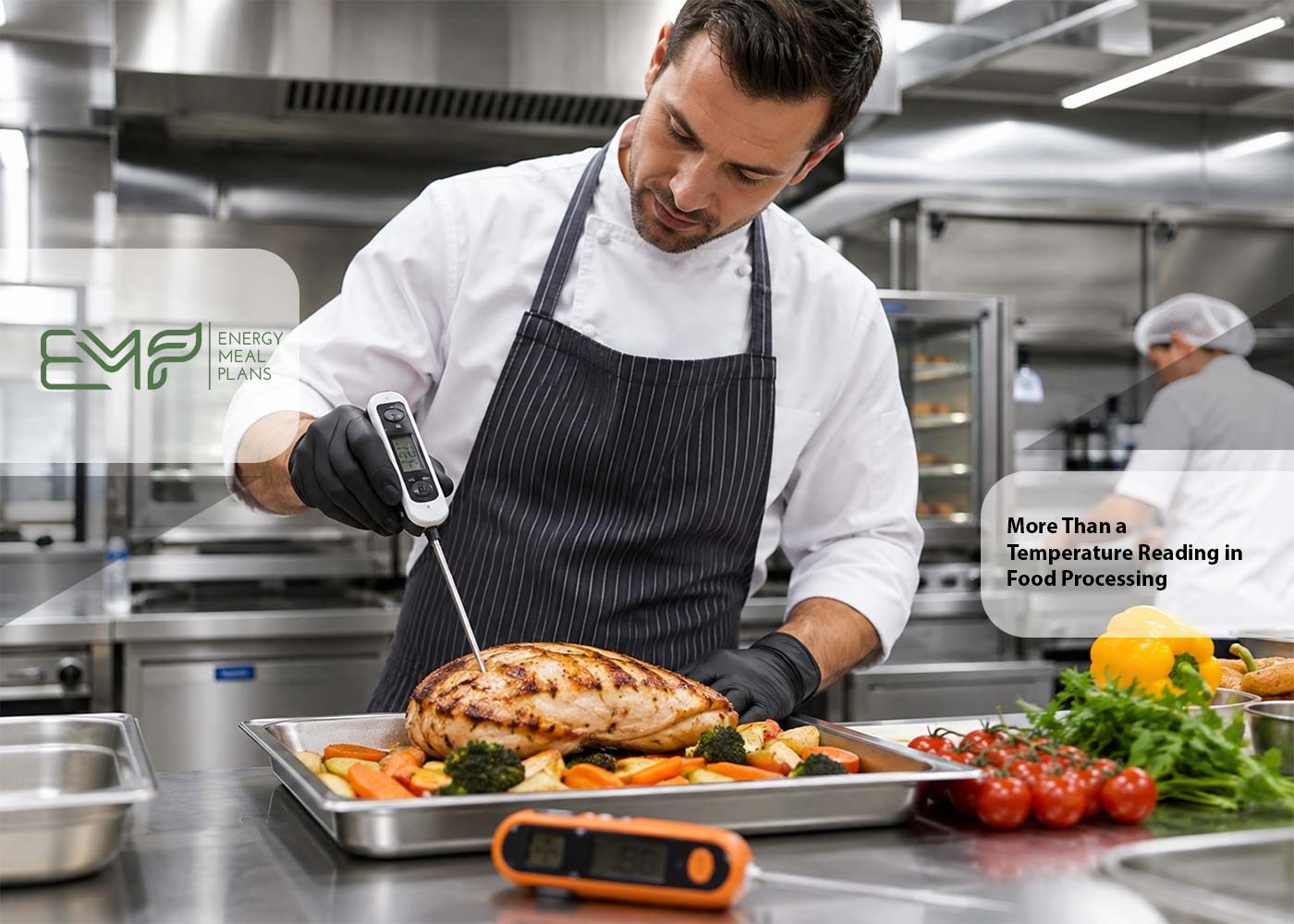
For decades, both home cooks and commercial kitchens treated
the food thermometer as a single-purpose compliance tool; an item pulled out
solely to verify that chicken won't give someone food poisoning. However,
modern science shifts the thermometer from an occasional safety check to an
active, core component of culinary execution.
With the right thermometer, you don't judge doneness by just
color or timer, as meat can brown prematurely, while juices can run clear
before a lethal thermal dose is achieved. Even further, it becomes a critical
measure of food safety. Behind every reliable food operation is a system built
on accurate information, and temperature measurement sits right at the center
of it.
1. A Food Thermometer Is Not Just a Kitchen Tool, It Is a Precision Control Point
Many people picture a thermometer as something used to check
whether meat is cooked. In a professional food environment, its role is much
wider. A commercial kitchen, supermarket, or food manufacturer is constantly
making decisions based on temperature:
- Has this delivery arrived within safe limits?
- Did the delivery arrive at the correct temperature?
- Has the center of the product reached the required cooking
temperature?
- Are chilled foods staying within acceptable storage
conditions?
- Did this cooked product reached the required internal
temperature?
- Is chilled food being stored correctly?
- Did a cooling process happen quickly enough?
These are not decisions that can be made by appearance alone.
A chicken breast can look ready but still require verification. A refrigerator can feel cold but still be operating outside acceptable limits. A prepared meal can appear perfectly fine while temperature records tell a different story.
This is why businesses operating under HACCP food safety
systems rely on accurately calibrated food probe thermometers
designed for specific situations, rather than assumptions:
- Probe thermometers for checking internal food temperatures
- Infrared models for quick surface measurements
- Combination devices for both surface and core readings
- Waterproof instruments designed for demanding food
environments
The equipment may be small, but the information it provides
influences major food safety decisions.
2. When Paper Records Meet a Busy Kitchen, Problems Can Appear
Modern food safety needs evidence, not human memory. A
temperature record may look simple on paper. Date, time, reading, signature.
Done. The difficulty is not creating the form. The difficulty is completing it
accurately when the kitchen is under pressure.
A lunch rush begins. A delivery arrives early. Someone calls
in sick. A staff member moves between tasks. These are normal situations in
food businesses, but they are also where manual systems can become
inconsistent.
Traditional paper temperature sheets relied heavily on
someone remembering to record every check correctly. The intention was right,
but busy environments create opportunities for missed entries, unclear
handwriting, or incomplete records.
This is where connected food measurement technology has
changed the process.
Modern instruments can provide:
- Bluetooth connection to mobile applications
- Digital temperature records
- Faster documentation
- Data export for reporting and audits
Instead of searching through paper records weeks later,
managers can access organized measurement history.
For larger food businesses, this creates a clearer
operational picture. It helps identify patterns, verify procedures, and
demonstrate compliance when required by regulators or internal quality teams.
The goal is not replacing people. It is giving people better information to
make decisions.
3. The Probe Touching the Food Must Be Treated Like Part of the Food System
One of the easiest details to overlook is the thermometer
probe itself. A probe moves from one food item to another throughout the day.
It may check raw ingredients, cooked products, sauces, or prepared meals.
Without proper cleaning between measurements, the same tool designed to improve
safety can introduce contamination.
Picture a busy preparation area. A worker checks raw meat,
places the thermometer aside, then uses it again moments later. The temperature
reading may be accurate, but the hygiene process has failed.
This is why professional kitchens use food-grade antibacterial
probe wipes and specific cleaning procedures.
These products are designed to:
- Clean probes between uses
- Reduce cross-contamination risks
- Fit into HACCP hygiene practices
- Avoid unsuitable chemical residues
Food safety is often decided by these small actions. The
equipment matters, but the way it is handled matters just as much.
4. Temperature as Part of a Complex Food Processing Test
While the food thermometer is the central control point for thermal
accuracy, high-demand food processing often requires reading temperature as
part of a broader, multi-parameter testing procedure.
Commercial frying oil is a prime example where monitoring
frying temperature and testing oil quality are two sides of the same coin.
Together, these tools help businesses maintain:
- Consistent food quality and texture
- Smarter oil replacement decisions
- Better cooking efficiency
- Reliable product standards
Also, because food environments are demanding, operators
must choose durable designs with features such as dust protection, water
resistance, and dishwasher-safe construction, to ensure accurate measurements
that remain reliable when they matter most.
In essence, food thermometer is the primary sensor of the
modern kitchen. It provides the fundamental data point that makes institutional
reliability possible. A commercial operation simply cannot achieve true
consistency or regulatory compliance across hundreds of daily meals without the
precise readings a professional tool generates. Furthermore, for
temperature-sensitive home cooking, it replaces anxious guesswork with
effortless, restaurant-grade precision.