Dubai is one of the few cities where eating well can be
genuinely convenient—if you stop treating it like a daily puzzle. Most people
don’t fail because they “lack discipline.” They fail because they’re deciding
from scratch every day: they get busy, they open their phone, search healthy food near me, click whatever
looks decent, and hope it won’t leave them hungry or heavy. The better approach
is to build a simple routine around healthy food dubai choices that you can
repeat without thinking—so even on chaotic days, you’re not gambling with your
energy or appetite.
If that sounds almost too basic, that’s the point.
Consistency isn’t created by the perfect meal. It’s created by removing
friction. When meals are predictable, your hunger becomes predictable. When
hunger is predictable, your choices stop swinging between extremes. You stop
doing the “tiny salad at lunch ? snack spiral ? big dinner ? reset tomorrow”
cycle. You simply eat like a person with a life.
Healthy in Dubai should feel normal
Healthy shouldn’t mean “light all the time” or “no fun.” A
meal is useful when it does three things: it keeps you full for 3–5 hours, it
doesn’t cause an afternoon crash, and it fits the day you’re living (work,
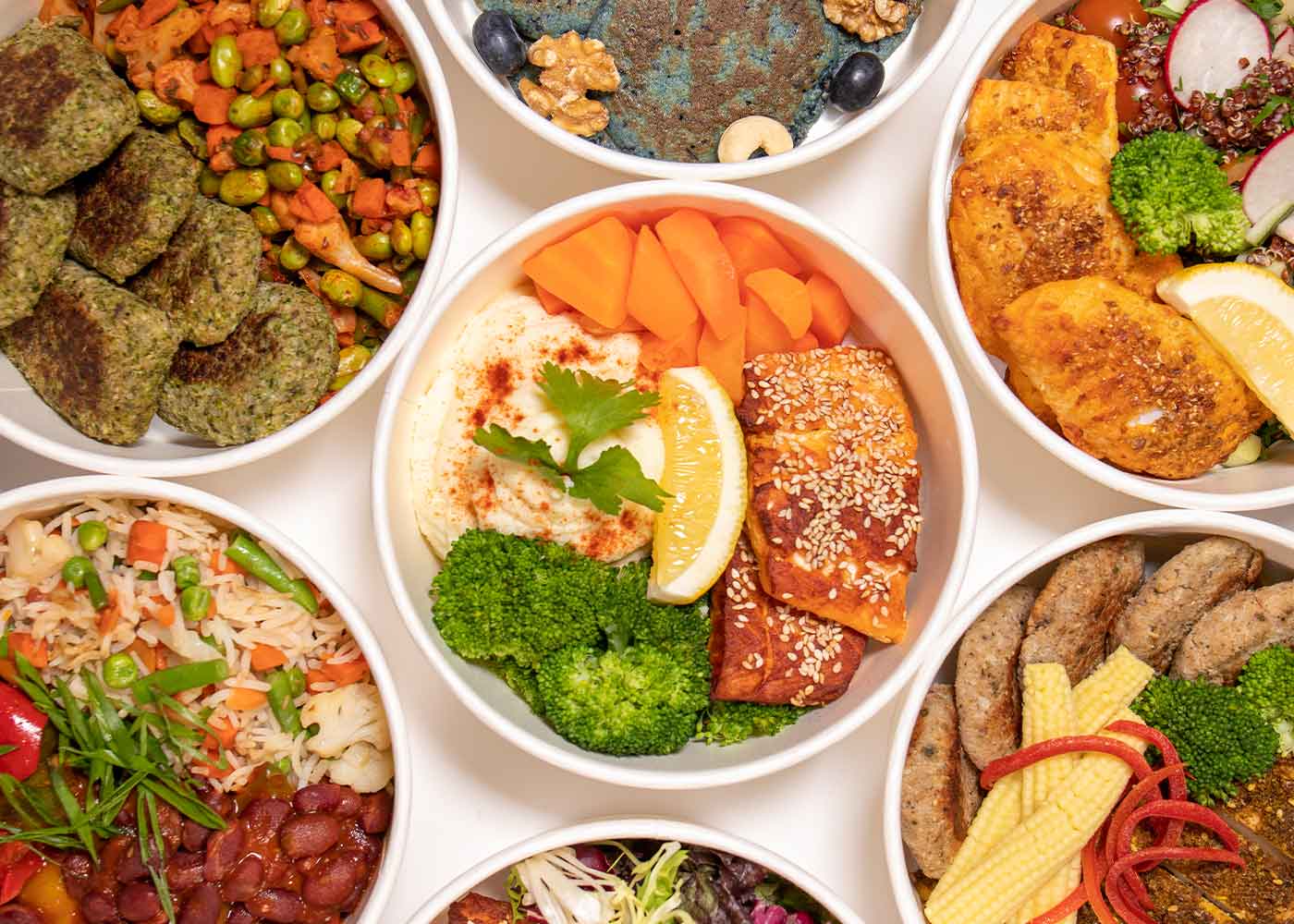
errands, gym, social plans). In practice, most meals that work have four parts:
- a clear protein (so you stay full)
- vegetables or fiber (so you feel satisfied without
heaviness)
- a carb you can control (so you have energy without
overdoing it)
- a sauce/fat that supports flavor without taking over the
plate
If your meals are missing protein or volume, they may look
healthy but they won’t behave healthy. You’ll be hungry later, and that hunger
will start making decisions for you.
Why Dubai makes consistency easier than you think
Dubai is designed for speed and convenience. That’s an
advantage—if you use it intentionally. You don’t need to cook every day to be
consistent here. You need a small set of “default meals” that you can order
almost anywhere and still feel good after.
Instead of asking, “What do I feel like today?” you ask:
- “What’s my default lunch when I’m busy?”
- “What’s my default dinner when I want to feel light?”
- “What’s my backup option when the day explodes?”
Once you answer those questions, the city becomes your
toolkit rather than your temptation.
The real secret: three defaults that you actually enjoy
If you want a plan that lasts, it has to match real life.
The fastest system is three repeatable meal structures:
Notice what’s not in that list: a complicated set of rules.
This isn’t a “diet plan.” It’s a decision plan.
The four questions that make ordering easy anywhere
When you open a menu, most people start reading everything
and get pulled by pictures, cravings, and fancy descriptions. Don’t do that.
Ask four questions:
1. What’s the protein—and is it enough?
2. Where’s the volume/fiber—vegetables, beans, lentils,
salad?
3. What’s the carb—and can I control it?
4. How saucy is it—and can I dial it down?
If you can answer those in 20 seconds, you’ll order well at
Arabic, Japanese, Italian, fast casual—anything.
The menu-language decoder (so you spot heaviness fast)
Menus don’t say “this will make you feel heavy.” They use
polite words. “Creamy,” “loaded,” “signature sauce,” “truffle mayo,” “crispy,”
“glazed,” and “extra cheese” usually mean your meal will be richer than it
looks. That’s not “bad.” It’s just information.
On weekdays—when you want stable energy—aim for menu
language like: grilled, roasted, baked, herbed, lemon, vinaigrette, fresh. Save
the richer words for nights when you’re choosing indulgence intentionally.
A small trick that changes everything: keep the flavor,
reduce the coating. Sauce on the side, use half, and let the ingredients taste
like themselves. You’ll still enjoy the meal—just without the post-meal slump.
A Dubai week that doesn’t require meal prep
Most people either try to be perfect or give up. A realistic
week sits in the middle:
- a few repeat lunches you can order quickly
- a couple of delivery meals for the busiest days
- one or two simple “home backup” meals that take 10–15
minutes
That’s it. You don’t need a chef phase. You need a safety
net.
Ordering across cuisines without feeling restricted
Dubai’s food scene is too good to pretend you’ll eat the
same cuisine forever. The trick is keeping the structure steady while flavors
change.
Middle Eastern / Levantine: grilled meats or fish + a big
salad tends to be the easiest “feel good after” meal. If you want extra
fullness without heaviness, lentil soup is a cheat code. Creamy garlic sauces?
Amazing—just treat them like a dial.
Japanese: poke-style bowls, sashimi + rice + salad, or
grilled fish works well. If “crispy” shows up three times, keep it for
weekends, not daily fuel.
Indian: tandoori proteins and dal are incredibly practical;
creamy curries are delicious but easy to overdo on a work night.
Italian: grilled mains and tomato-based dishes often feel
lighter than cream sauces—especially when you add a salad for volume.
You’re not banning foods. You’re choosing a structure that
supports your day.
A day-by-day rhythm you can copy (without becoming rigid)
Here’s a simple pattern that works because it’s flexible:
Monday: default lunch + simple dinner
Tuesday: busy day ? use backup order
Wednesday: social dinner ? keep lunch protein-forward and
lighter on sauce
Thursday: light dinner (soup + salad structure)
Friday: repeat a favorite default
The goal isn’t to follow a schedule perfectly. The goal is
to have a rhythm you can return to.
Midweek rescue (this is where people usually quit)
The midweek moment is where routines die: one hectic day,
one heavy meal, then the mindset of “I’m off track.” Don’t do that. Reset with
a meal that’s light and satisfying—something with real protein and real
volume—and then move on.
This is also the best time to rely on your anchors instead
of scrolling. When you’re stressed and hungry, you’re more likely to open your
phone and search healthy food near me and pick the first thing that looks good.
Instead, default to your saved healthy food dubai options—the meals you already
know work—because you’ve tested them in real life, not just in photos.
Why “healthy” meals still fail (and how to fix it fast)
Most “healthy fails” in Dubai come from predictable causes:
Too little protein: the meal looks clean but you’re hungry
later. Fix it by upgrading the protein—not by “being stricter.”
Too much hidden sauce: a bowl or salad gets drenched and
becomes heavier than expected. Fix it by controlling sauce, not by removing
everything enjoyable.
Too little volume: the meal is small, so your day turns into
constant snacking. Fix it by adding soup, salad, or vegetables.
Liquid calories: sweet coffees and juices quietly turn into
a second meal. Keep them as an intentional treat—not your default.
If you only adjust one thing, adjust protein. It’s the
anchor for appetite.
The 80/20 rule that works in Dubai
Dubai has brunches, dinners, and late nights. You don’t need
to avoid them. You need boundaries that don’t feel dramatic.
A simple one: choose one indulgence per occasion—dessert or
drinks or a rich starter—not all three. And anchor the night with a
protein-forward main. When the main is balanced, you can enjoy everything else
without waking up feeling wrecked.
Two home backups that save your whole week
Even if you don’t “cook,” keep two backup meals in your
pocket:
- eggs + salad + toast
- rotisserie chicken + bag salad + microwave rice
- tuna salad + crackers + fruit
- lentils + yogurt + cucumber + olive oil
This isn’t meal prep. It’s insurance. It prevents “nothing
at home” from turning into random fast food.
Final mindset shift
Consistency in Dubai isn’t about being strict. It’s about
reducing decisions and making the healthy choice easy. If your meal has
protein, vegetables, a controllable carb, and reasonable sauce, you’re doing it
right.