Good knife skills for meal prep come down to three choices:
one sharp chef's knife for most of the work, a short paring knife for the
detail, and a cutting routine that groups vegetables, proteins and herbs so the
blade never has to switch jobs halfway. A sharp edge is also the safer one.
With those basics in place, a weekly batch cook takes less time and gives more
even results.
Key takeaways
- Two knives cover almost every batch cooking task: a chef's
knife of around 20 cm and a paring knife of around 10 cm.
- A dull knife needs more force and slips more easily, which
makes it more dangerous than a sharp one.
- Cutting by family, vegetables first and raw proteins last,
saves dishwashing and limits cross-contamination.
- Even pieces cook evenly: the size of the cut matters as
much as the recipe.
- Stainless steel is the easy choice; carbon steel cuts
beautifully but must be dried straight after use.
Why knife skills decide how long your meal prep takes
Cooking at home is close to universal, which makes the time
it takes worth saving. According to the USDA Economic Research Service, drawing
on American Time Use Survey data for 2022 to 2023, 90.1% of adults prepared
meals, and 39.5% of them said they enjoyed it a lot. The same report found that
36.8% of adults had eaten prepared, ready-to-eat food the day before their
interview.
Batch cooking sits between those two habits. You cook once,
then eat home-made food on the days when there is no time to cook. Most of a
batch session is spent cutting, not cooking. Dicing two kilos of vegetables,
trimming chicken thighs and chopping herbs for five days of lunches can take
far longer with a blunt knife and a poor routine than with a sharp blade and a
clear order of work.
The knife also affects the result. Pieces of the same size
cook in the same time, so a tray of roasted vegetables comes out evenly done
instead of half burnt, half raw. That consistency is what keeps meal prep food
pleasant to eat on day four.
Choosing the knife: steel, size and handle
For batch cooking, size comes first. A chef's knife with a
blade of around 20 cm is long enough to rock through a pile of herbs or slice a
whole squash, and short enough to stay precise. A paring knife of around 10 cm
handles peeling, trimming and coring. A bread knife can join them, but you
rarely need a bigger block than that.
Steel comes next. Stainless steel resists moisture and
acidic foods, which suits long sessions with tomatoes, citrus and marinades.
Carbon steel takes a very fine edge and is easy to resharpen, but it is not
stainless: it takes on a patina with use and must be washed and dried straight
away. Some cooks love that character. A hand-forged knife from France, such as the 90MCV8 carbon steel knives Couteaux Morta
forges in its Saint-Nazaire workshop for the table and the outdoors, follows
the same care routine. The maker explains that the blade should be cleaned with
warm water and a soft sponge, then dried immediately after each use.
The handle matters on a long session. It should fill the
hand without pressure points and stay secure when your fingers are slightly
wet. Natural wood handles feel warm and grip well, but they should never soak
in the sink or go in the dishwasher.
A sharp knife is a safer knife
Knife injuries are common enough to be studied at scale. A
study published in the Journal of Emergency Medicine estimated that about 8.25
million knife-related injuries were treated in US emergency departments between
1990 and 2008, an average of 1,190 per day. Fingers and thumbs were injured in
66% of cases, and cooking or kitchen knives were involved in 36% of the cases
where the type of knife was recorded.
A dull blade makes things worse, not better. France's
national occupational safety institute, the INRS, points out in its guidance
for restaurant kitchens that a poorly sharpened knife requires more effort and
increases the severity of injuries when the knife slips. A sharp edge bites
into a tomato skin or an onion layer at once, so you press less and stay in
control.
Two habits do most of the work. Curl the fingertips of the
guiding hand under, so the flat of the blade rests against the knuckles rather
than the nails. And put a damp cloth under the chopping board so it cannot
slide, which matters when you are cutting for twenty minutes in a row.
A batch cooking cutting routine that works
The order of cutting saves both time and dishwashing. Start
with the clean, dry ingredients, then move to the wet ones, and finish with raw
meat or fish, so the board only needs a full wash once. A typical session for
five days of lunches might look like this:
1. Herbs and aromatics first: parsley, cilantro, garlic,
ginger.
2. Firm vegetables next: carrots, peppers, zucchini, onions,
cut to the same size for each tray.
3. Soft and juicy produce after: tomatoes, cucumbers, fruit.
4. Raw proteins last, on a separate board if you have one.
|
Task |
Knife |
Cut |
Why it helps meal prep |
|
Onions, peppers, carrots |
Chef's knife |
Even dice or batons |
Same size, same cooking time on the tray |
|
Fresh herbs |
Chef's knife |
Rocking chop |
A sharp edge cuts instead of bruising the leaves |
|
Garlic, ginger, shallots |
Paring knife or chef's knife |
Fine mince |
Small pieces spread flavor through a whole batch |
|
Chicken thighs, beef |
Chef's knife |
Strips or cubes, against the grain |
Tender pieces that reheat without drying out |
|
Trimming, peeling, coring |
Paring knife |
Detail work in the hand |
Less waste than a large blade |
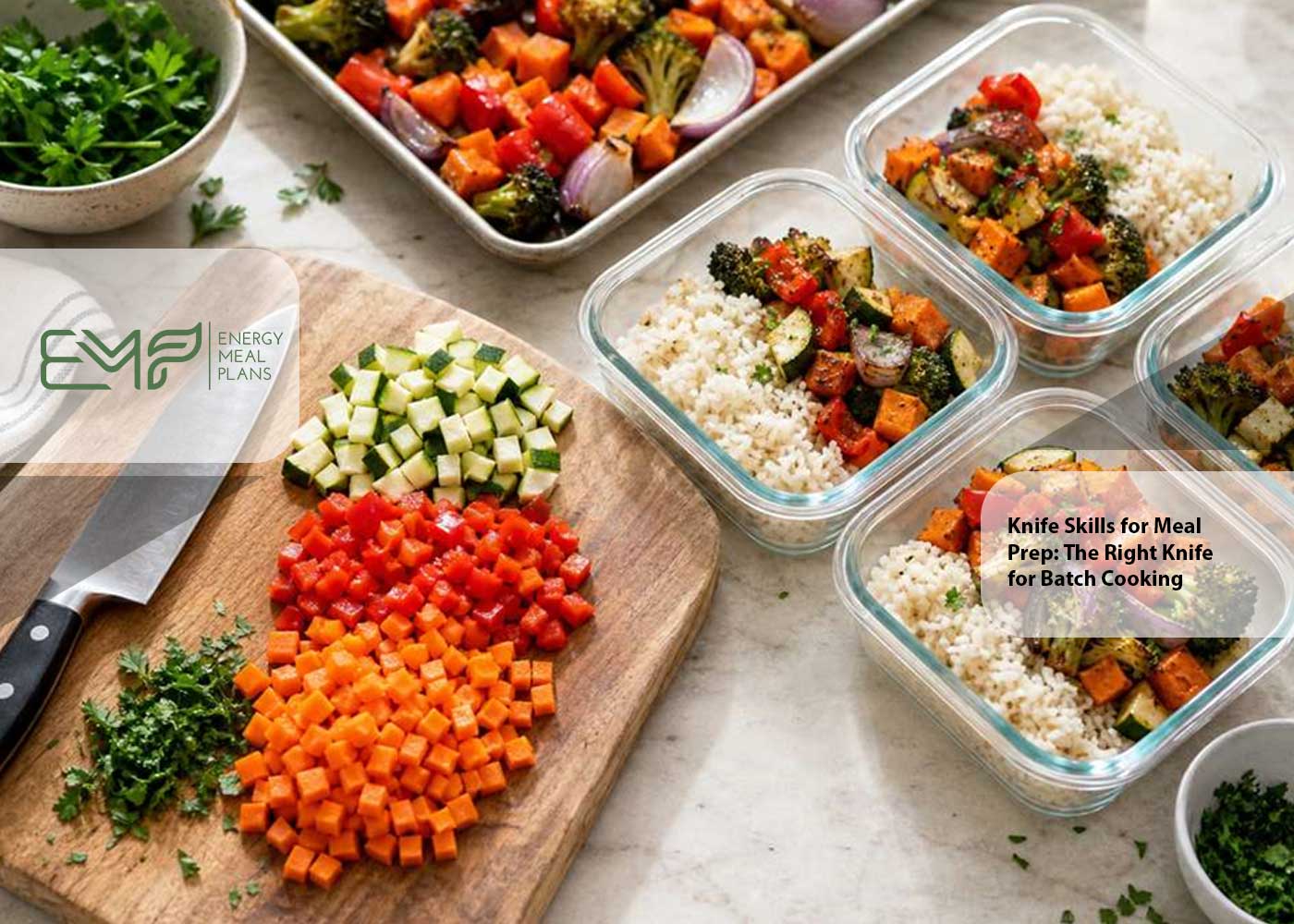
Take a tray of roasted vegetables for four lunches. Cut the
carrots and squash into 2 cm cubes and the peppers and onions into slightly
larger pieces, since they soften faster. Everything comes out of the oven at
the same moment, and the boxes look and taste the same on Thursday as on Monday.
Keeping the edge between sessions
A honing steel realigns the edge, which bends slightly with
use; a few strokes before each session are enough. A whetstone removes a little
metal to create a new edge, and comes out when honing no longer brings the
knife back. Hand washing, immediate drying and a magnetic strip or knife block
do the rest. A knife thrown in a drawer with cutlery dulls quickly.
Frequently asked questions
What is the best knife for meal prep?
A chef's knife of around 20 cm handles most batch cooking
tasks: dicing vegetables, chopping herbs and slicing proteins. Add a paring
knife for peeling and trimming, and you are covered.
How often should I sharpen my kitchen knife?
Hone it before each session and use a whetstone when honing
no longer restores a clean cut. If the blade slides on a tomato skin before
biting, it needs sharpening.
Can carbon steel knives be used for acidic foods?
Yes, but wash and dry the blade straight after cutting
tomatoes, citrus or onions. Carbon steel is not stainless and will darken,
which is normal, but it should never be left wet.